
Esports as a Training Ground for Tomorrow’s Leaders
Share on Social Media
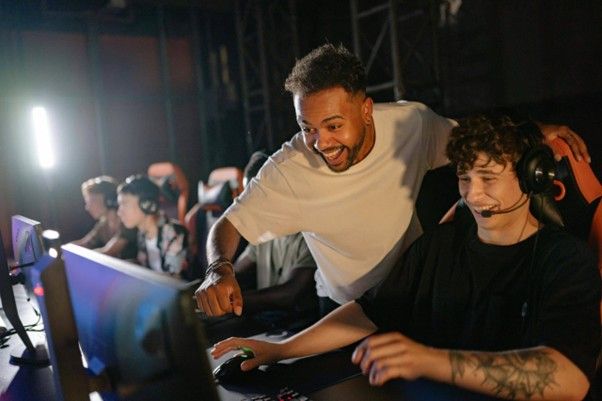
When people think about leadership development in schools, they often picture student councils, debate clubs, or traditional sports teams. Rarely do they imagine students wearing headsets, analysing digital environments, coordinating split-second decisions, and leading teammates from behind a screen.
Yet this is exactly what is happening every day within structured esports programmes and it raises an important question:
Are we underestimating esports as a leadership incubator?
Esports Is Not “Just Gaming”
Esports today bears far more resemblance to organised sport than casual play. Teams train on structured schedules, analyse performance, assign roles, review tactics, and balance academic commitments alongside competition.
With the global gaming population surpassing 3.3 billion players in recent years, this is no longer a niche activity. It is a mainstream, digitally native environment where competition, collaboration, and performance intersect.
Within a school context, esports programmes demand teamwork under pressure, clear and concise communication, accountability to peers, strategic thinking and adaptability, and emotional regulation after failure.
These are not secondary skills. They are core leadership competencies.
Strategy, Decision-Making, and Accountability in Real Time
Competitive titles such as League of Legends, Rocket League, Fortnite, and even digital chess require players to process information rapidly, recognise patterns, plan collaboratively, and make decisions with incomplete data.
Mistakes are immediate, and so is the feedback.
Students learn to lead without formal authority, take responsibility for outcomes, support teammates when strategies fail, and adapt quickly rather than freeze under pressure.
This is leadership in its most practical form: decision-making with consequences.
Confidence Built Through Contribution
One of the most overlooked benefits of esports programmes is their impact on students who do not naturally gravitate toward traditional athletics.
Many join quietly, unsure of their role or voice. Over time, the environment rewards insight, foresight, and collaboration rather than physical dominance.
It is common to see students who were once hesitant begin to call strategies, coach peers during gameplay, encourage teammates after losses, and participate more actively in classroom settings.
Leadership does not emerge through titles. It emerges through consistent contribution.
Inclusion, Belonging, and First-Time Team Experiences
For many young people, esports provides their first experience of being part of a team.
That sense of belonging, showing up for others, being relied upon, and contributing to a shared goal, is powerful. It reinforces behaviours that translate directly into adult professional environments such as reliability, time management, respectful communication, and shared accountability.
These are precisely the qualities employers frequently identify as lacking, yet they are being practised regularly in well-structured esports programmes.
Beyond the Screen: Career and Capability Pathways
The value of esports extends well beyond competitive play. Students gain exposure to digital and technology ecosystems, media production and broadcasting, cybersecurity and IT pathways, and project coordination and digital operations.
Whether students pursue careers in business, engineering, creative industries, or public service, the transferable skillset remains highly relevant.
A Broader Question for Educators and Employers
If leadership is defined by collaboration, strategic thinking, resilience, and communication in complex environments, then esports deserves serious consideration as a structured developmental platform, not a distraction.
With the right framework, clear expectations, and proper guidance, esports becomes more than a game.
It becomes a training ground for modern leadership.
Perhaps the real question is not whether esports belongs in education, but whether education can afford to ignore it.
Final Thought
If you are involved in education, training, or workforce development, consider this:
How are you recognising and translating digital-first leadership skills into formal learning pathways?
The conversation is not only relevant. It is long overdue.
Try our FREE Course - https://www.aureninstitute.com/course/pay-transparency-in-the-eu-a-practical-guide-for-hr-leaders
Get in touch
sales@aureninstitute.com
UK Office
Tel: +44 7505706062
Malta Office
92, No. 1, St Edward Street,
Qormi, QRM 2136
Tel: +356 9999 1039
VAT No: MT20967027
CPD Reg. No: 22536
UK FSB No: 65539277